Apple trees for small spaces
Columnar apple trees are the best-kept secret in small-space gardening, and I'd plant them again tomorrow.
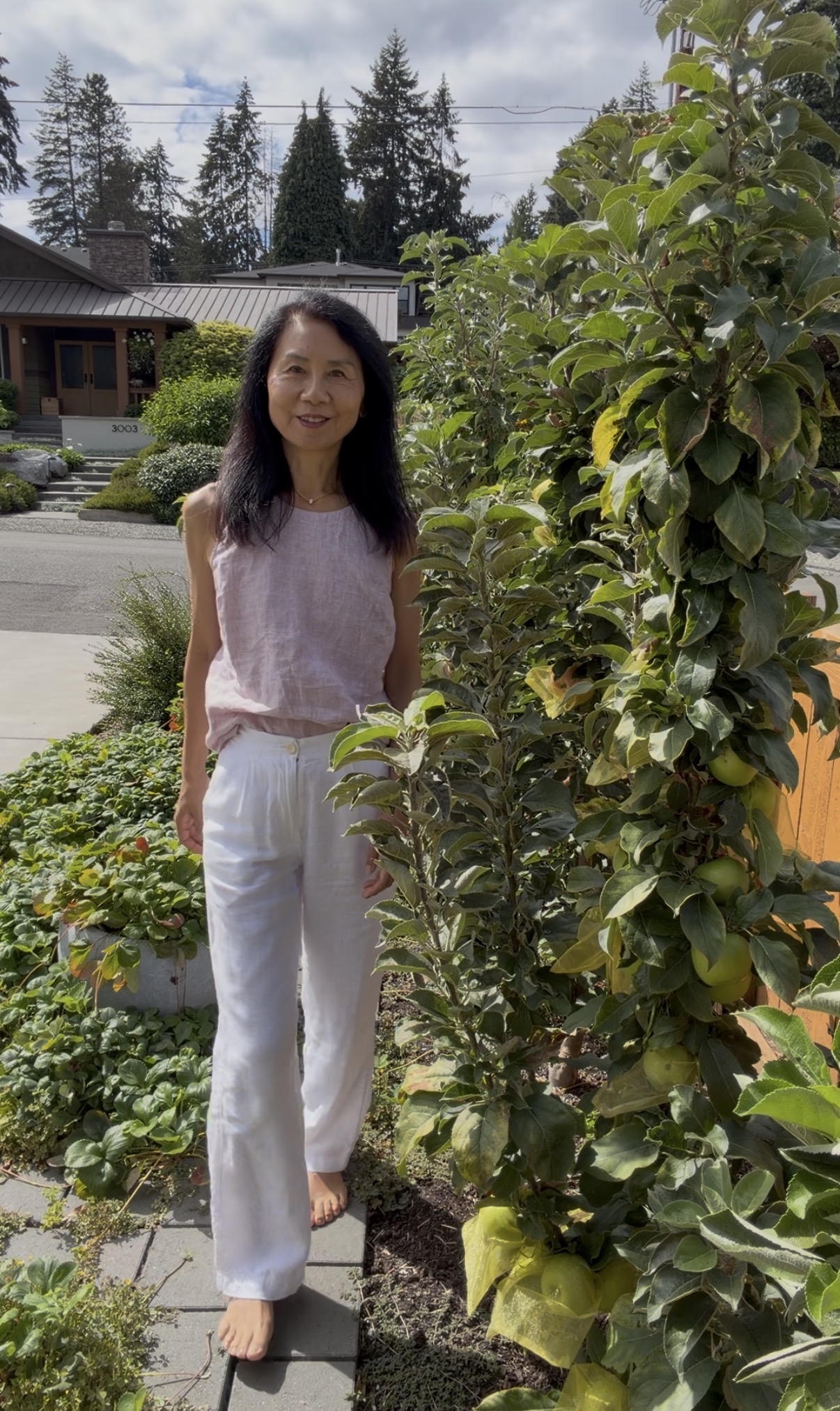
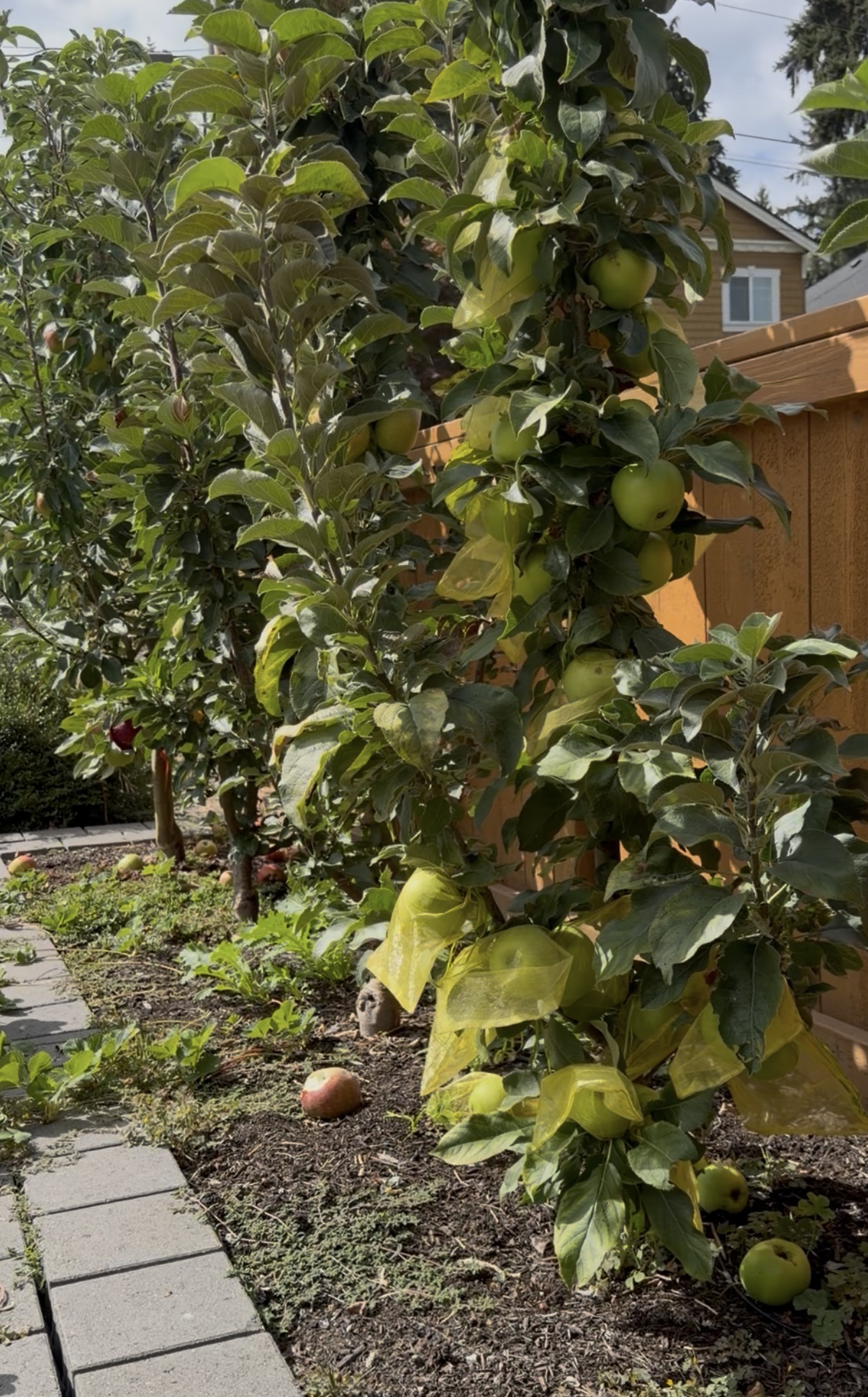
I planted six trees along my fence line, four varieties, a harvest and a privacy screen in the same two feet.
They grow straight up, about 10 feet tall and only 2 feet wide, so you can tuck a whole row along a fence, or keep just one in a container on the patio.
Will they grow where you are?
Most columnar varieties are rated for USDA zones 4 through 8, and a few go as cold as zone 3. I'm in 8b, here in the Pacific Northwest, and mine are thriving. If you're in that range you're fine.
Warmer than zone 8 is where it gets tricky, and it isn't about the heat. Apples need a stretch of winter cold to set fruit properly, so in zones 9 and up you want to look specifically for a low-chill variety. Colder than zone 4, same deal in reverse: check the tag before you buy.
Zones are listed per variety, not for columnar apples as a category, so always look at the specific tree. In a container there's one extra thing to know: pots don't insulate roots the way the ground does, so a potted tree behaves like it's in a zone colder than where you actually live. Tuck it against the house or into the garage for the worst of winter.
Why they're worth it
- {{ r.n }} {{ r.text }}
“This is the best-kept secret for apple trees, they fit any size garden, big or small, and they're such a great hack for saving space.”
How to plant them
Columnar apples fruit on short spurs along one main stem, so the whole tree stays narrow and upright, about 8 to 10 feet tall and 2 feet wide. In the ground, in a container, or on a patio, they all work. Plant two different cultivars, though: like any apple, they need a partner to pollinate. They bloom mid to mid-late season, which also makes them good pollinizers for any other apple in your yard.
Give them full sun and soil that drains, sandy loam is ideal, slightly acidic, pH 6.0 to 7.0. Skip low spots where water sits. Work an inch or two of compost or aged manure into an area twice the width of the hole. In pots, a good well-draining potting mix is enough.
- 01Soak the roots. Bare-root trees go in a bucket of water for one to two hours before planting.
- 02Dig twice as wide. Twice the width of the root system, the same depth, and loosen the soil at the bottom.
- 03Keep the graft union high. That swollen knob sits 2 to 3 inches above the finished soil line, this is the step people get wrong.
- 04Backfill and water as you go. Native soil with a little compost, watering gradually to settle it. Don't tamp it down hard.
- 05Mulch, but not against the trunk. Two to four inches of wood chips or straw, held back a few inches from the bark.
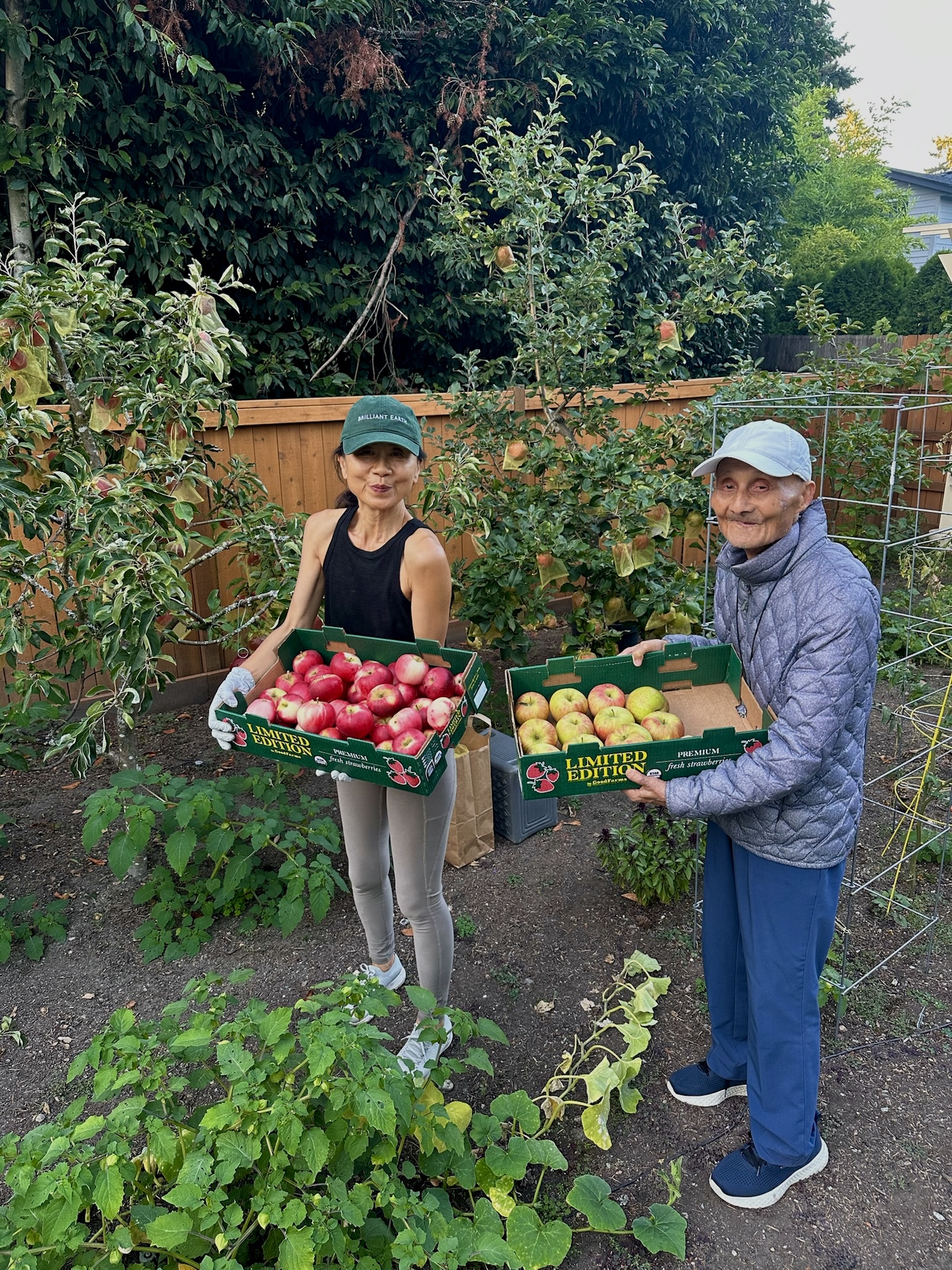
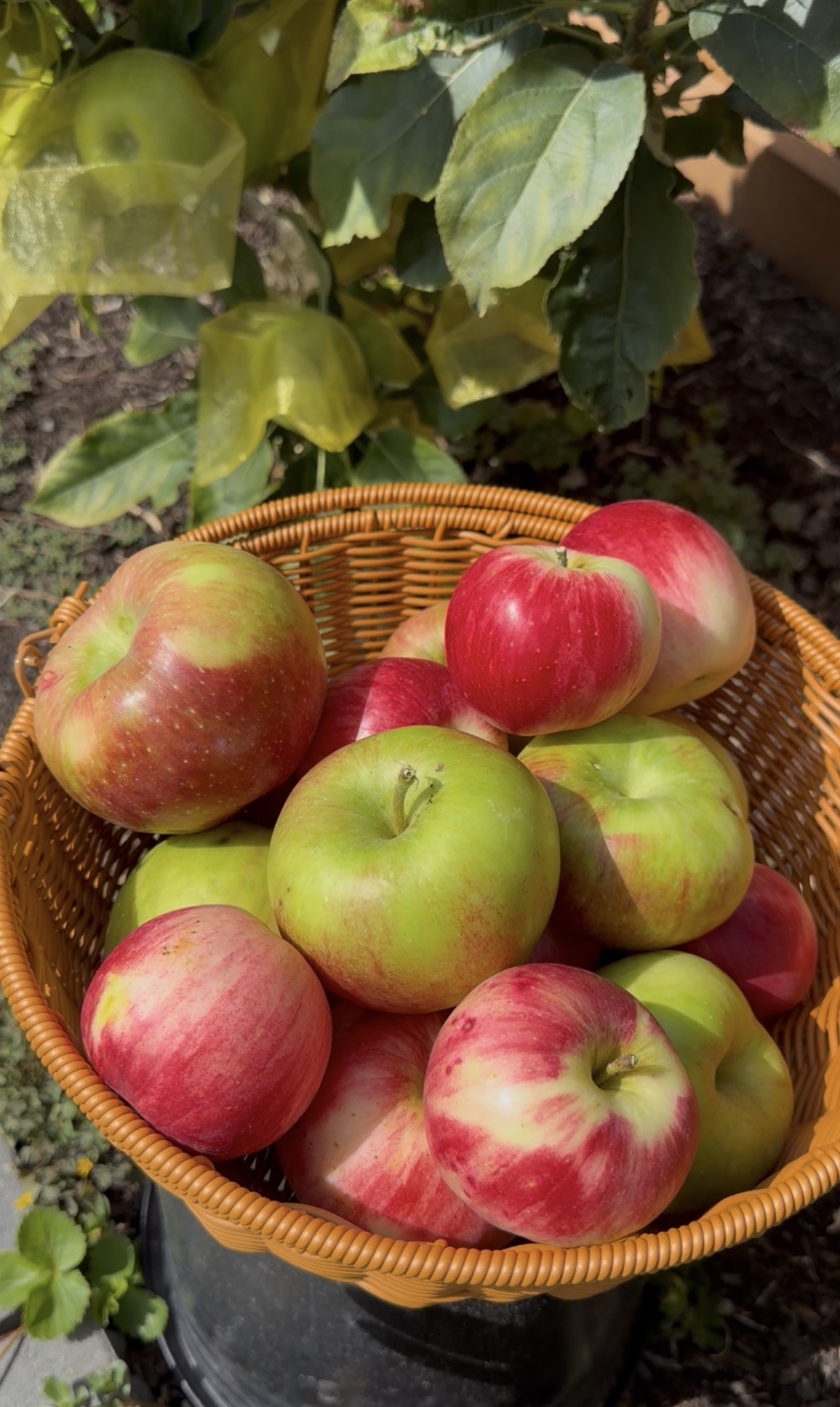
Picking at the end of September in zone 8b, off my regular apple tree and the columnar ones.